
Hybrid Limited Shoulder Surgical Management (HLSSM) Sayed Issa's Hybrid Shoulder Arthroscopic-Open Surgical Management

Abstract
Introduction
The idea of HLSSM2 is to get the least easy surgical intervention, as arthroscopic surgery begins with examining the shoulder joint, and the location and size of the lesion are determined, then open over the lesion with an open surgical approach that is very limited for surgical repair; not using arthroscopic instruments but conventional surgical instruments in the second step. Figure 1
Figure 1.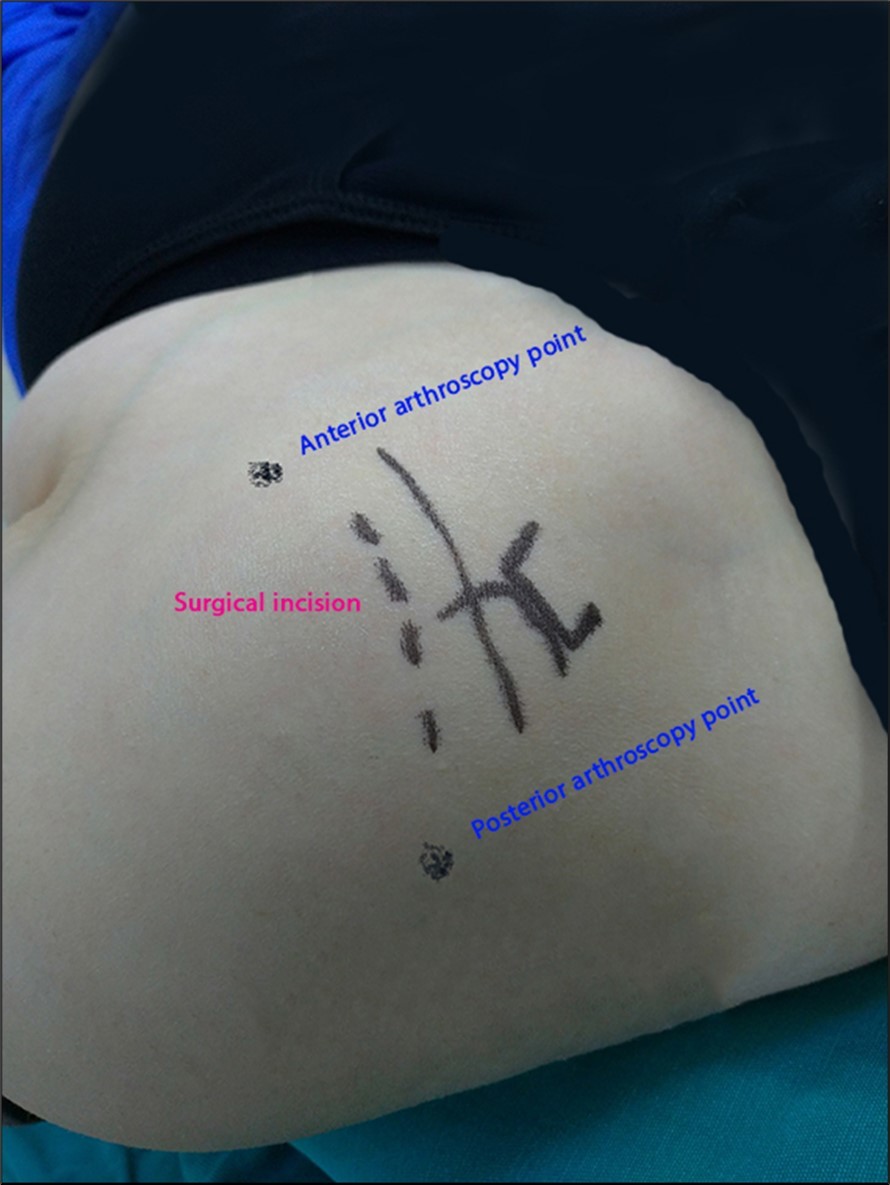
Download figure
Methods
Clinical experience with this technique consists of 44 cases over a period of thirty-one months; this study was from September 2020 to May 2023. All cases were done as outpatients and under general anesthesia.
Results
The mean duration of the operation was 35 minutes, and the minimum duration was 25 minutes. There was no major nerve or vascular injury in all cases. This technique is simple, safe, and good cosmetically satisfactory for all patients after full recovery about three months after the procedure, and it is cost-effective. One 43-year-old female patient suffered pain and stiffness during the first six months after surgery and was not very satisfied; she did not stop visiting us till now; she was not happy because of shoulder pain and tenderness.
Conclusion
It can be used by experienced hand surgeons in shoulder arthroscopy and in Mini Lateral Shoulder Approach (MLSA)3, especially in countries where shoulder arthroscopic release and repair with suture anchors are expensive4 or not available. This technique is not very simple but is available, safe, cosmetically satisfactory, and cost-effective.
Article Information
- Received
- Accepted
- Published
Academic Editor: Mona Hassan, Department of Human Anatomy and Embryology, Faculty of Medicine, Suez Canal University, Ismailia, Egypt
Checked for plagiarism: Yes
Review by: Single-blind
Copyright © 2023 Abdulhamid Sayed Issa
 This is an open-access article distributed under the terms of the Creative Commons Attribution License, which permits unrestricted use, distribution, and reproduction in any medium, provided the original author and source are credited.
Corresponding author: Sayed Issa Abdulhamid1, Professor, Adults Nursing Department and Traumatic and Orthopedic Nursing Faculty, School of Nursing and Midwifery of Aleppo, Syria —
Competing Interests
The authors have declared that no competing interests exist.
Funding
No specific funding statement was provided by the authors.
Data Availability
No data-availability statement was provided by the authors.
Citation:
Introduction
HLSSM (Sayed Issa's Hybrid Shoulder Arthroscopic-Open Surgical Management) can be used by experienced hand surgeons in shoulder arthroscopy and in Mini Lateral Shoulder Approach (MLSA), especially in countries where arthroscopic release is expensive and not available.
HLSSM is Hybrid Limited Shoulder Surgical Management. Figure 2
Figure 2.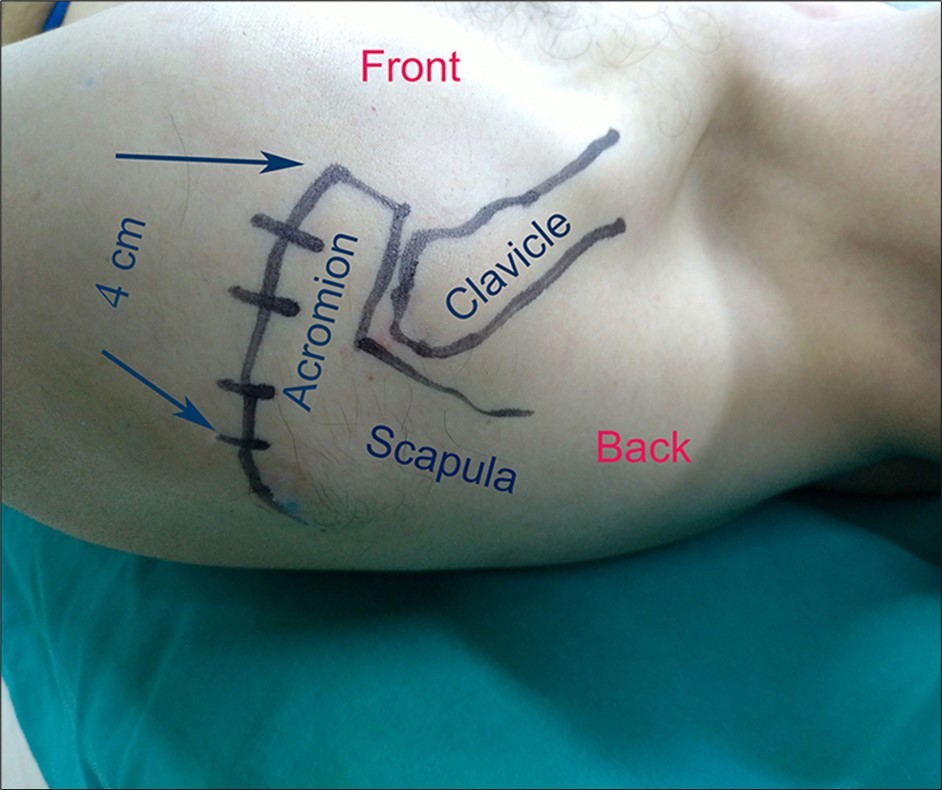
Download figure
There is one arthroscopic incision on the posterior lateral edge of the acromion for the arthroscope entrance, the second entrance is for the probe, arthroscopic incisions approach is about 0.5cm. Figure 3
Figure 3.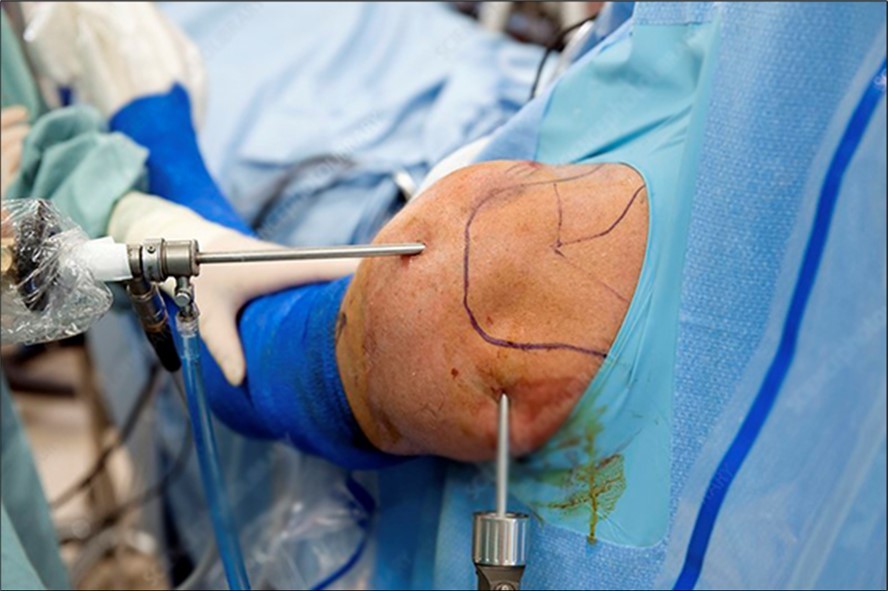
Download figure
After identifying the full characteristics of the lesion, which are its size, shape, and topographic location5, we go for Mini Lateral Shoulder Approach (MLSA), known as Second Sayed Issa's Approach. Figure 4
Figure 4.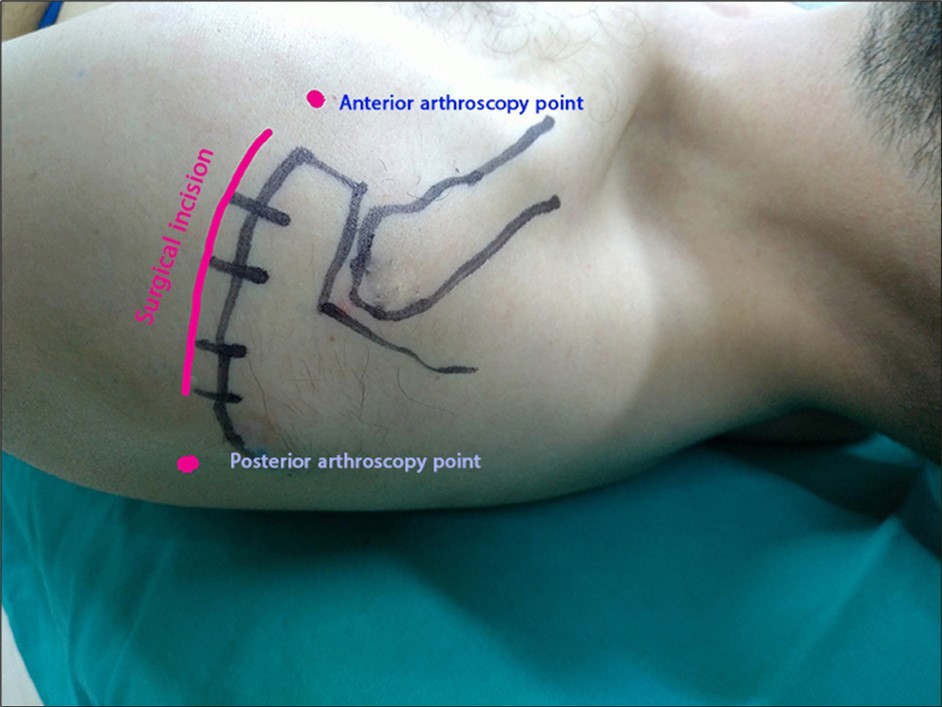
Download figure
HLSSM acquires good rehabilitation achievements in a shorter time, more rapid return to work and daily activities, a short healing period, less surgical traumatic incision, less tissue dissection, and less scar tenderness than in typical open shoulder release; it causes gentle scar and good cosmetic skin healing, the procedure takes about 35 to 45 minutes.
The disadvantages of shoulder arthroscopy with repairing the identified lesions include the costly full equipment required, costly surgery, and prolonged procedure time (more than 45 minutes). Most importantly, there have been many reported complications in association with the procedure, including neuropraxia.
Results
The mean duration of the operation is less than typical shoulder arthroscopy. No single major complication, wound or neurovascular, was recorded in any of the patients. Minor complications were observed including two superficial wound infections, no wound hematomas, and no paresthesia in upper limb nerve distribution.
Fibrous adhesion is effective between subcutaneous tissue from one side and the acromion edge on the other side at the skin incision zone.
After a six-month follow-up evaluation, all patients were satisfied with their cosmetic results. Figure 5
Figure 5.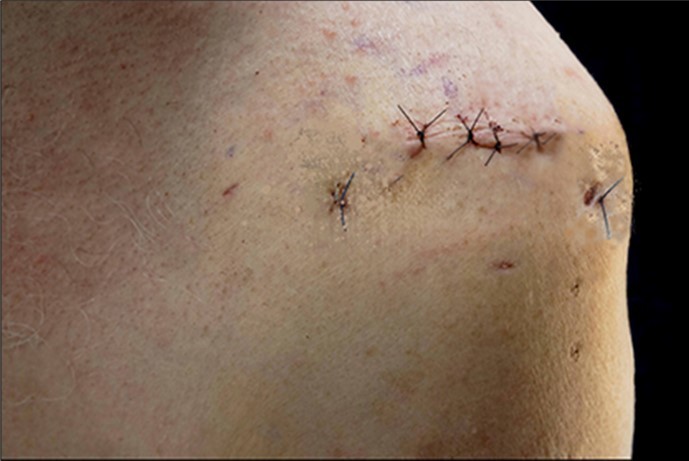
Download figure
The postoperative cosmetic appearance of the shoulder is an important issue related to skin incisions. Our results showed clearly that the HLSSM we used is moderately satisfactory and comparable to typical open approaches. The overall patient satisfaction with the procedure was also good at the final follow-up visit after eight months. A longer follow-up period is needed to assess the long-term results of this approach regarding the possibility of recurrence of the disease, which was not done in our study.
Discussion
An open repair requires several centimeter-long incisions. This procedure is performed when there is a large or complex tear or when tendon stitching is needed.
During the open procedure, the shoulder surgeon split the shoulder muscles to access the torn tendon6. Typically, this procedure also involves the removal of the bone spurs.
The all-arthroscopic rotator cuff repair procedure is performed with the help of an arthroscope – a small, thin, flexible tube with a camera on one end. During all-arthroscopic repair, only key-hole size incisions are made to send the arthroscope and surgical
instruments. The surgeon views the torn tendon on a video monitor and re-attaches it with small surgical instruments.
Mini-Open Rotator cuff repair7
Compared to open repair, mini-open repair techniques involve making a smaller incision. Like all-arthroscopic repair, this technique avoids the need to split shoulder muscles to access the torn tendons.
Like open repair, this procedure involves viewing the torn tendon directly rather than via a monitor. With no complications in 44 cases, our study has good advantages with a good plain presentation.
We found no differences between the two techniques and ours by scar length, complications, and rehabilitation.
Our results show that a large improvement in symptoms and function occurred in the first three weeks after surgery, and further improvement continued up to two months postoperatively. These improvements are comparable with those after open shoulder release and after endoscopic ones.
The average operating time in our series was 35 minutes (range 25-45 minutes). It is almost similar to the operating times reported by other authors who used the comparable small incision technique. The reduced scar, pillar pain, and tenderness of arthroscopic techniques were better than the ones.
The postoperative cosmetic appearance of the shoulder is an important issue related to skin incisions. Our results showed clearly that the HLSSM we used is good satisfactory and comparable to endoscopic and open approaches. The overall patient satisfaction with the procedure was also good at the final follow-up visit.